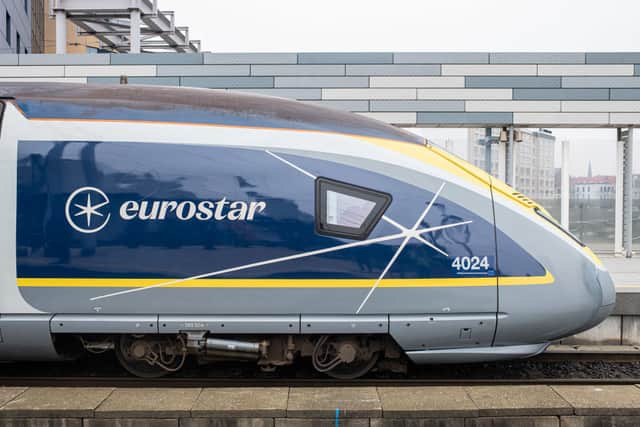
There is something quietly extraordinary about boarding a train in the heart of London and stepping off in Paris — not after a grueling transatlantic flight or a chaotic road trip, but after a smooth, two-hour-and-sixteen-minute journey that takes you beneath the English Channel and deposits you at the Gare du Nord, a ten-minute Metro ride from the Eiffel Tower. This is the Eurostar experience, and for millions of travelers every year, it has become not just the preferred way to travel between Britain and the European continent, but a statement about how modern, mindful travel should feel. In an era where speed, sustainability, and comfort are no longer considered competing values but complementary ones, Eurostar has positioned itself as the most compelling choice for fast European getaways — and the reasons travelers keep coming back are both practical and deeply personal.
The Journey Begins at the Heart of the City
One of Eurostar’s most underappreciated advantages is the simple fact that its terminals are not airports. When you travel with Eurostar, you depart from London St. Pancras International — one of the most beautiful Victorian railway stations in the world, located in central London and easily accessible by the Underground, buses, taxis, and on foot. You arrive in Paris at Gare du Nord, Amsterdam Centraal, or Brussels-Midi, all of which sit directly in the urban centers of their respective cities. Compare this to the airport experience: the average traveler flying from London to Paris must account for at least 90 minutes of pre-departure time at Heathrow or Gatwick, plus the journey to the airport (often 45 minutes to over an hour from central London), plus the flight itself, plus baggage reclaim, plus the journey from Charles de Gaulle or Orly into Paris — which can take another hour. When all of that is added up honestly, the Eurostar journey is not just competitive in time; it frequently wins outright when measured from city center to city center.
Check-in with Eurostar requires arriving just 30 minutes before departure, and the security and border control process — while thorough — moves efficiently through a quiet, climate-controlled terminal rather than a sprawling, over-stimulating airport concourse. For families traveling with children, for business travelers who value their time, and for anyone who simply finds airports stressful and disorienting, this difference is not trivial. It is the kind of detail that travelers mention again and again when explaining why they choose the train over the plane.
Speed That Feels Like Comfort
Eurostar trains travel at speeds of up to 300 kilometers per hour (186 miles per hour) on high-speed rail lines across France and Belgium, which means the distance between London and Paris is covered in approximately two hours and sixteen minutes on the fastest services. London to Brussels takes around two hours, and services to Amsterdam complete the journey in just under four hours — a remarkable achievement given that Amsterdam is more than 500 kilometers from London. These are not approximations or best-case estimates; they are the standard, everyday experience that Eurostar delivers with remarkable consistency.
What makes this speed feel different from air travel is the environment in which it occurs. There is no altitude anxiety, no cabin pressure adjustment, no seatbelt sign forcing you to remain seated, and no turbulence. You sit in a well-designed seat with a genuine table in front of you, with enough space to open a laptop, spread out a newspaper, or enjoy a meal from the onboard café. The Wi-Fi, while not always flawless, is available throughout the journey, and the power sockets at every seat mean your devices arrive at your destination fully charged. The sensation of watching the French countryside blur past at high speed while sipping a coffee and reading — or working, or resting — is one that frequent Eurostar travelers describe as genuinely pleasurable rather than merely tolerable.
Ticket Classes and What Each Offers
Eurostar offers a well-structured tiered ticketing system that caters to a wide range of travelers, from budget-conscious explorers to business professionals who want a premium experience. Understanding the differences helps travelers choose the option that best fits their needs and budget.
| Class | Typical Features | Best For |
|---|---|---|
| Standard | Comfortable seats, café access, power sockets, Wi-Fi | Budget travelers, solo trips, students |
| Standard Premier | Wider seats, at-seat meal included, more legroom | Couples, short business trips |
| Business Premier | Lounge access, flexible booking, premium 3-course meal, priority boarding | Frequent business travelers, special occasions |
| Snap / Saver Fares | Discounted Standard fares booked in advance, non-refundable | Advance planners, leisure travelers |
The Standard class is genuinely comfortable by any reasonable comparison — Eurostar does not operate a no-frills product at the bottom of its range in the way that budget airlines do. Even the most affordable ticket comes with a proper seat, a table, and access to the café bar. Standard Premier adds the warmth of an at-seat meal and a noticeably more relaxed atmosphere in the carriage. Business Premier is in an entirely different league, offering access to the exclusive lounge at St. Pancras before departure, fully flexible tickets, and a full three-course meal served at your seat that would not look out of place in a mid-range restaurant. For travelers marking a special occasion or conducting important business, the Business Premier experience sets a tone of arrival before the destination itself has been reached.
Sustainability and the New Logic of Responsible Travel
Perhaps the most significant shift in why travelers choose Eurostar in recent years is the growing awareness of environmental responsibility. The aviation industry is one of the largest contributors to carbon emissions globally, and as travelers have become more conscious of their carbon footprint, the calculus of choosing between a flight and a train has changed dramatically. A Eurostar journey between London and Paris produces approximately 90% fewer carbon emissions per passenger than an equivalent short-haul flight. This is not a marginal improvement — it is a transformation in the environmental cost of the journey.
Eurostar is powered entirely by electricity, and as the European energy grid continues to incorporate higher proportions of renewable energy, the sustainability credentials of the service only improve over time. For environmentally conscious travelers, this is not just a feel-good consideration; it is a genuine factor in their travel decisions. The rise of the “flight-free” travel movement across Europe has brought Eurostar renewed attention and new customers who might previously have defaulted to budget airlines without much thought. Travel writers, sustainability advocates, and everyday families who are trying to reduce their environmental impact have all made Eurostar a centerpiece of their approach to European travel, and the service has met that interest with continued investment in its fleet and infrastructure.

The Night Train Renaissance and Eurostar’s Expanding Network
While Eurostar has long been synonymous with the London–Paris and London–Brussels routes, the operator has been actively expanding its reach across the continent. In recent years, direct Eurostar services have connected London to Amsterdam without a change of train — a development that opened the Netherlands to British travelers in an entirely new way. There have also been announcements and progress toward eventual services deeper into Europe, including the possibility of direct connections to Germany and beyond, which would reshape the geography of European rail travel for British passengers.
This expansion connects to a broader renaissance in long-distance and overnight rail travel across Europe. Operators like Austrian Federal Railways (ÖBB) and others have reintroduced overnight sleeper trains on routes that had been abandoned for decades, responding to a genuine surge in demand from travelers who want to see Europe by rail rather than by air. Eurostar sits at the heart of this movement for British travelers, serving as the gateway through which a genuinely pan-European rail journey becomes possible. A traveler can board at St. Pancras, connect in Brussels or Paris, and continue by high-speed rail to Cologne, Frankfurt, Zurich, Lyon, or Marseille — creating a rail-only European adventure that is often faster, cheaper, and more memorable than any equivalent itinerary built around airports.
The Experience of Arriving
There is a particular pleasure in arriving at a European destination by train that is difficult to fully articulate but universally recognized by those who have experienced it. When you step off a Eurostar train in Paris, you are already in the city. There is no shuttle bus, no transit zone, no 40-minute taxi ride from an airport suburb. You are at Gare du Nord, and the Metro is downstairs, and the city is immediately, viscerally present — the smell of it, the noise of it, the particular quality of the afternoon light in the station. This kind of arrival has a texture that airport arrivals rarely possess.
For weekend travelers in particular — those who have only two or three days in Paris, Amsterdam, or Brussels and want to use every hour of them well — this difference in the quality of arrival is enormously important. A Friday evening Eurostar from London can have you sitting at a café on the Île Saint-Louis by dinner time, with a full Saturday and Sunday ahead of you before a Sunday evening train brings you home. That is not a fantasy; it is the experience that tens of thousands of Eurostar passengers have every single weekend, and it explains why the service has built the kind of loyal customer base that other modes of transport can only envy.

Why Eurostar Continues to Win Traveler Loyalty
Eurostar’s appeal is ultimately not reducible to any single factor. It is the accumulation of advantages — the central terminals, the competitive journey times, the sustainable credentials, the genuinely comfortable onboard experience, and the quality of arrival — that together create something more than the sum of its parts. In a travel landscape that has become increasingly defined by friction, delay, and diminished passenger experience, Eurostar represents a vision of what transit can be when it is designed around the traveler rather than around operational efficiency alone.
Frequent travelers often describe a kind of addiction to the Eurostar experience — the feeling that taking the train is not a compromise or a consolation prize but a genuine preference, a better way of moving through the world. When you factor in the pre-departure calm of St. Pancras, the productivity of the onboard journey, the city-center arrival, the carbon conscience that comes free of charge, and the sheer reliability of a service that runs on dedicated high-speed lines rather than congested airspace, it becomes genuinely difficult to make the case for flying on routes where Eurostar competes.
For anyone planning a European getaway in 2026 — whether it is a romantic weekend in Paris, a family holiday in Brussels, a business trip to Amsterdam, or the first leg of a longer rail adventure across the continent — the question is no longer why you would choose Eurostar. The question is why you would choose anything else.
Book Eurostar tickets at eurostar.com. Advance bookings offer the best fares and are recommended, particularly for travel during peak periods and school holidays.